
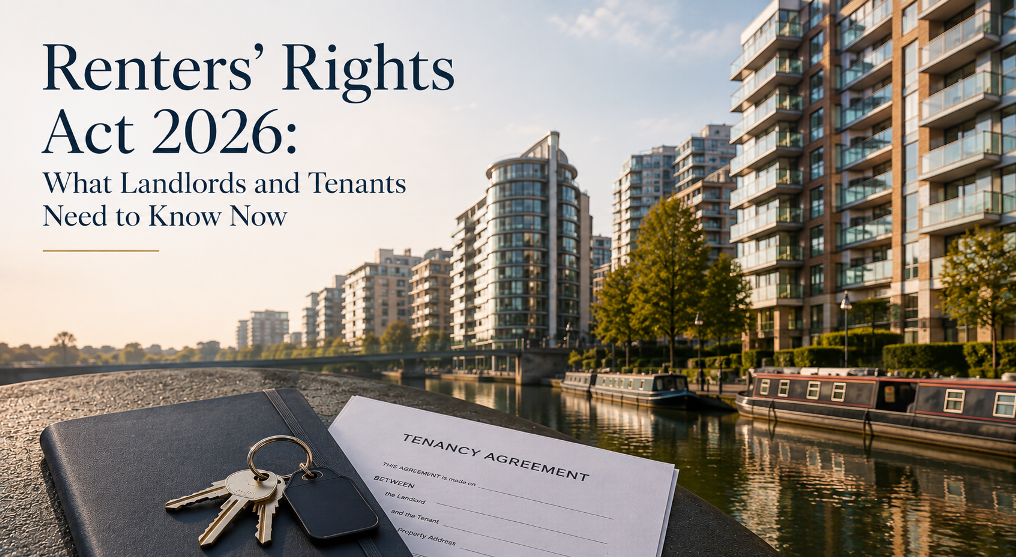
The way homes are rented in England has changed significantly.
The first major reforms under the Renters’ Rights Act 2025 came into force on 1 May 2026, changing tenancy agreements, rent increases, possession procedures and the rights and responsibilities of both landlords and tenants.
For landlords and tenants, these are no longer future changes to prepare for. They are now part of the day-to-day rules governing most private rented tenancies.
Here are some of the most important changes to understand.
What changed under the Renters’ Rights Act on 1 May 2026?
From 1 May 2026, most private rented tenancies in England moved to a new system of assured periodic tenancies.
This means that new assured tenancies no longer have a fixed end date. Existing assured shorthold tenancies (ASTs) also generally became assured periodic tenancies automatically.
For landlords, this means tenancy documentation and processes need to reflect the new rules.
For tenants, it provides greater flexibility because a tenancy continues on a rolling basis rather than ending at the conclusion of a fixed term.
Has Section 21 been abolished?
Yes.
From 1 May 2026, landlords can no longer use Section 21 “no-fault” eviction to regain possession of a privately rented property.
However, this does not mean landlords cannot recover their property.
Landlords can still seek possession where one of the permitted legal grounds applies. These can include circumstances such as:
- the landlord wishing to sell the property;
- the landlord or qualifying family member wishing to move into it;
- serious rent arrears; or
- anti-social behaviour.
Correct procedures, notice periods and documentation are now particularly important when possession is required.
Can tenants end a tenancy more easily?
Under the new periodic tenancy system, tenants can generally end their tenancy by providing two months’ notice in writing.
The notice normally needs to end on the day rent is due, or the day immediately before it is due, although landlord and tenant can agree different arrangements in writing.
This gives tenants greater flexibility while still providing landlords with a defined notice period.
How can landlords increase the rent?
Rent increases are now subject to a more structured process.
For most assured periodic tenancies, landlords can generally increase the rent once in a 12-month period and must follow the prescribed procedure.
Tenants also have the right to challenge a proposed increase if they believe it is above the open-market rent.
For Central London landlords, this makes obtaining an accurate rental valuation particularly important. Pricing should reflect genuine market evidence rather than simply applying an automatic annual percentage increase.
Are rental bidding wars still allowed?
No.
A rental property must be advertised with a clear asking rent, and landlords and letting agents cannot ask for, encourage or accept an offer above the advertised rental price.
This means setting the correct asking rent from the outset has become even more important.
For landlords in competitive rental markets such as Central London, professional pricing and comparable evidence can help ensure a property is positioned correctly without falling foul of the new rules.
How much rent can a landlord ask for in advance?
The Renters’ Rights reforms also introduced restrictions around rent in advance.
Landlords and letting agents cannot require prospective tenants to pay rent before the tenancy agreement has been entered into, and the new rules generally prevent landlords from requiring large amounts of rent upfront.
This is particularly relevant in the Central London market, where international tenants, students and applicants without a conventional UK income history may previously have offered substantial rent in advance.
Landlords and agents therefore need to ensure that referencing and affordability procedures work within the new framework.
Can tenants request permission to keep a pet?
Yes.
Tenants now have a statutory right to request permission to keep a pet, and landlords must consider the request rather than applying an automatic blanket refusal.
A landlord can still refuse a request where there is a reasonable justification.
The practical circumstances of the property will therefore remain relevant when considering individual requests.
Can landlords refuse applicants who have children or receive benefits?
Landlords and letting agents must not discriminate against prospective tenants simply because they have children or receive benefits.
Tenant selection can still take legitimate factors such as affordability, referencing and suitability into account, but blanket exclusions based on children or benefit status are prohibited.
What happened to existing tenancy agreements?
Existing written tenancy agreements did not generally need to be replaced simply because the new legislation came into effect.
However, landlords and agents were required to provide most existing tenants with the Government's Renters’ Rights Act Information Sheet 2026 by 31 May 2026.
Different requirements applied where a tenancy was entirely verbal.
For new tenancies created from 1 May 2026, landlords must also provide specified written information about the tenancy.
Keeping accurate records of what information was provided, when it was provided and to whom is therefore increasingly important.
What happens if a landlord does not comply?
The Renters’ Rights Act gives local authorities stronger enforcement powers.
Depending on the breach, landlords and agents may face financial penalties and other enforcement action.
The scope of Rent Repayment Orders has also been expanded, with tenants potentially able to recover up to two years' rent for certain offences.
Good record keeping, correct documentation and a clear audit trail are therefore becoming an increasingly important part of professional property management.
What changes are still to come?
The implementation of the Renters’ Rights Act is continuing in phases.
One of the next significant developments is the Private Rented Sector Database, which the Government intends to roll out gradually from late 2026.
Further reforms will follow, including the Private Rented Sector Landlord Ombudsman and future measures relating to property standards.
Landlords should therefore view 1 May 2026 as the beginning of the new regulatory environment rather than the end of the reform process.
What does the Renters’ Rights Act mean for landlords?
For landlords in Paddington, W2 and the wider Central London market, the new rules make professional management and accurate compliance records increasingly important.
The fundamentals of successful letting have not changed: good properties, correctly priced and professionally managed, remain attractive to quality tenants.
What has changed is the framework surrounding the tenancy.
Landlords now need to pay particular attention to:
- tenancy documentation
- rent reviews
- possession procedures
- applicant selection
- rent-in-advance rules
- tenant requests
- prescribed information; and
- evidence that compliance obligations have been met.
What does the Renters’ Rights Act mean for tenants?
For tenants, the reforms provide greater security and flexibility while introducing clearer rules around how a tenancy operates.
Tenants should understand that landlords can still regain possession where a valid legal ground exists. Equally, tenants now have greater protection against no-fault eviction, excessive rent increases, rental bidding and certain forms of discrimination.
Understanding these rights — and the responsibilities that continue alongside them — can help create a clearer relationship between landlord and tenant.
Renting or letting property in Paddington or Central London?
At Grange London, we work with landlords and tenants across Paddington and Central London, and have updated our lettings and property management processes to reflect the Renters’ Rights Act reforms.
For landlords, this means helping ensure tenancies are correctly structured, documented and managed under the new rules.
For tenants, it means clear communication about your tenancy and the processes that apply throughout it.
If you own a rental property and would like to discuss its current rental value, management or the implications of the Renters’ Rights Act, contact the Grange London lettings and property management team.
https://www.gov.uk/guidance/renters-rights-act-an-overview-for-landlords?
Read our earlier guide to how landlords prepared for the introduction of the Act